FEFreeExamDumps.in

DP-300 Practice Questions — Page 15

Question 141

Open question ↗

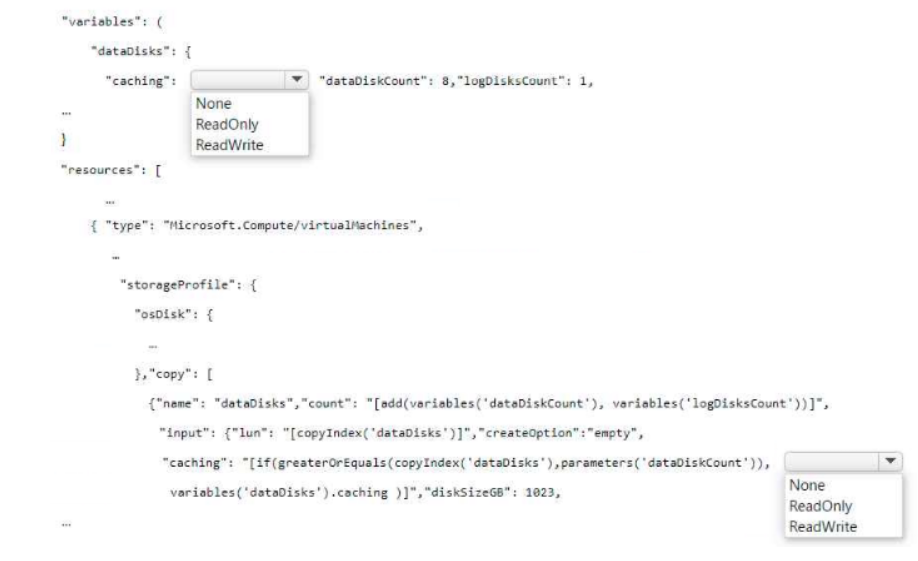
You need to use an Azure Resource Manager (ARM) template to deploy an Azure virtual machine that will host a Microsoft SQL Server instance. The solution must maximize disk I/O performance for the SQL Server database and log files.

How should you complete the template? To answer, select the appropriate options in the answer area.

NOTE: Each correct selection is worth one point.
Question 141

Question 142

Open question ↗

You have an Azure subscription that contains an Azure SQL database named db1.

You need to implement SQL insights for db1.

Which two resources should you create first? Each correct answer presents part of the solution.

NOTE: Each correct selection is worth one point.

  • A.a storage account
  • B.a virtual machine
  • C.an Azure logic app
  • D.an Azure function
  • E.a Log Analytics workspace

Question 143

Open question ↗

You have an Azure subscription that contains the resources shown in the following table.

App1 experiences transient connection errors and timeouts when it attempts to access db1 after extended periods of inactivity.

You need to modify db1 to resolve the issues experienced by App1 as soon as possible, without considering immediate costs.

What should you do?

Question 143
  • A.Enable automatic tuning for db1.
  • B.Increase the number of vCores allocated to db1.
  • C.Decrease the auto-pause delay for db1.
  • D.Disable auto-pause delay for db1.

Question 144

Open question ↗

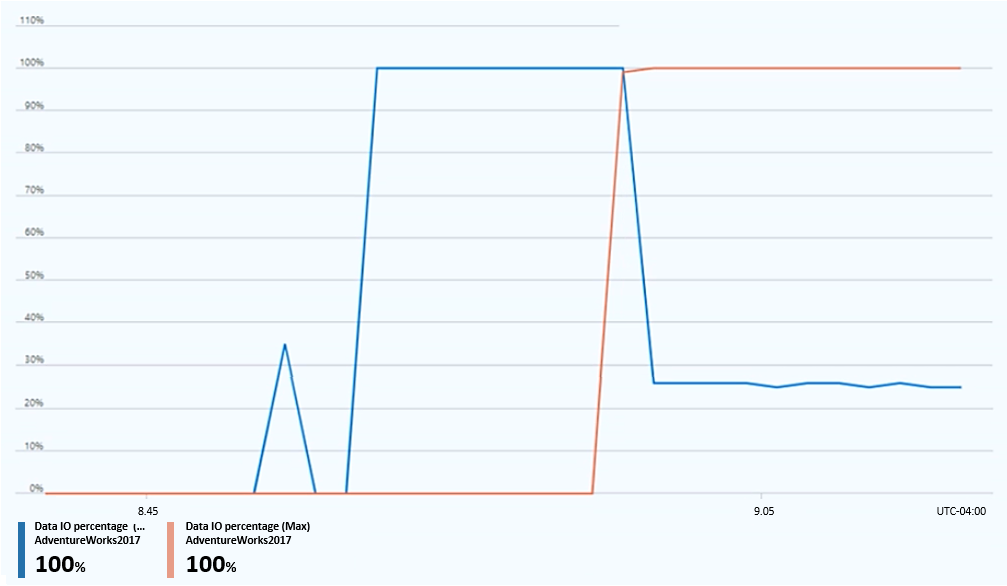
You have an Azure SQL database named DB1 that contains a table named Table1.

You run a query to load data into Table1.

The performance metrics of Table1 during the load operation are shown in the following exhibit.

Use the drop-down menus to select the answer choice that completes each statement based on the information presented in the graphic.

NOTE: Each correct selection is worth one point.

Question 144

Question 145

Open question ↗

You have the following resources:

• 15 SQL Server on Azure Virtual Machines instances

• 20 Azure SQL databases

You need to recommend a solution to centrally monitor the resources for security vulnerabilities.

What should you include in the recommendation?

  • A.database audits
  • B.Microsoft Defender
  • C.SQL insights
  • D.Azure SQL Auditing

Question 146

Open question ↗

You have an Azure SQL database named DB1 in the General Purpose service tier.

You need to monitor DB1 by using SQL Insights.

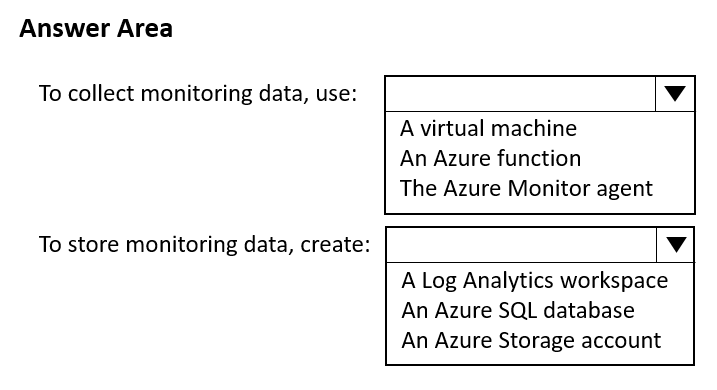
What should you include in the solution? To answer, select the appropriate options in the

answer area.

Question 146

Question 147

Open question ↗

You have an Azure SQL database named DB1 in the General Purpose service tier.

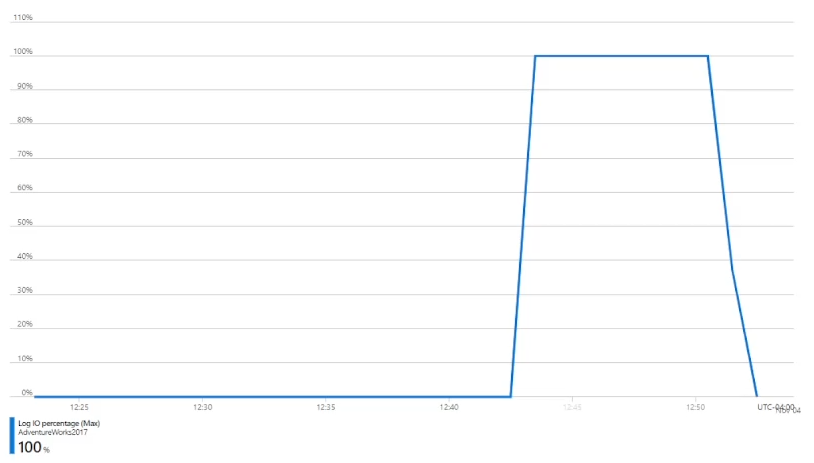
The performance metrics for DB1 are shown in the following exhibit.

You need to reduce the Log IO percentage. The solution must minimize costs.

What should you do?

Question 147
  • A.Change Service tier to Business Critical.
  • B.Increase the number of vCores.
  • C.Perform a checkpoint operation.
  • D.Change Recovery model to Simple.

Question 148

Open question ↗

You have an Azure SQL database named DB1 that contains a nonclustered index named index1.

End users report slow queries when they use index1.

You need to identify the operations that are being performed on the index.

Which dynamic management view should you use?

  • A.Sys.dm_exec_query_plan_stats
  • B.Sys.dm_db_index_physical_stats
  • C.Sys.dm_db_index_operational_stats
  • D.Sys.dm_db_index_useage_stats

Question 149

Open question ↗

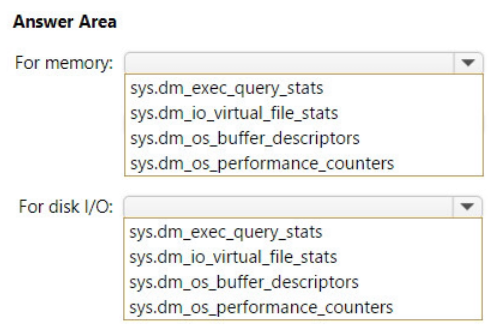
You have an Azure SQL managed instance named SQLMI1 that hosts multiple databases.

You need to monitor the performance of SQLMI1 and identify which database uses the most memory and the most disk I/O.

Which objects should you query? To answer, select the appropriate options in the answer area.

NOTE: Each correct selection is worth one point.

Question 149

Question 150

Open question ↗

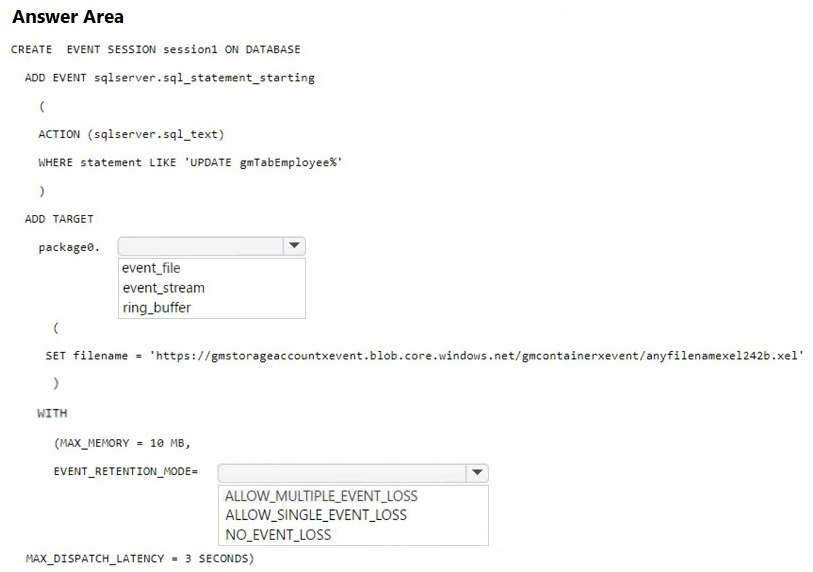
You have an Azure subscription that contains an instance of SQL Server on Azure Virtual Machines. The virtual machine hosts a database named DB1.

You need to monitor DB1 by using Extended Events. The solution must meet the following requirements:

• Capture raw event data and store the data in Azure Storage.

• Minimize the performance impact of capturing extended events.

How should you complete the Transact-SQL statement? To answer, select the appropriate options in the answer area.

NOTE: Each correct selection is worth one point.
Question 150