FEFreeExamDumps.in

DP-300 Practice Questions — Page 4

You have an Azure subscription linked to an Azure Active Directory (Azure AD) tenant. The subscription contains 10 virtual machines that run Windows Server 2019 and host Microsoft SQL Server 2019 instances.

You need to ensure that you can manage the SQL Server instances by using a single user account.

What should you do first?

  • A.Enable a user-assigned managed identity on each virtual machine.
  • B.Deploy an Azure Active Directory Domain Services (Azure AD DS) domain and join the virtual machines to the domain.
  • C.Enable a system-assigned managed identity on each virtual machine.
  • D.Join the virtual machines to the Azure AD tenant.
You have an Azure subscription.

You plan to deploy a new Azure virtual machine that will host a Microsoft SQL Server instance.

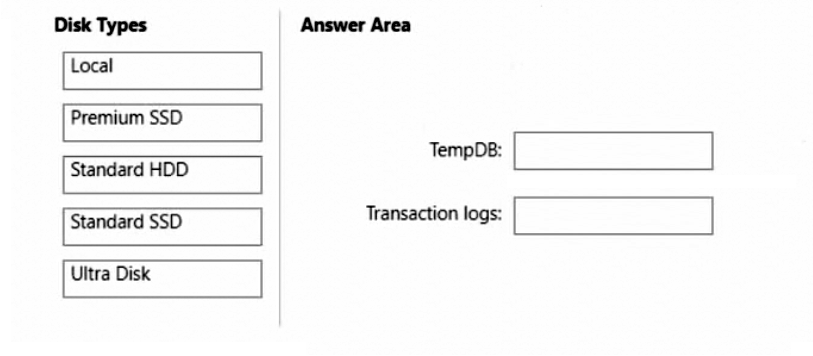
You need to configure the disks on the virtual machine. The solution must meet the following requirements:

• Minimize latency for transaction logs.

• Minimize the impact on IO throughput of the virtual machine.

Which type of disk should you use for each workload? To answer, drag the appropriate disk types to the correct workloads. Each disk type may be used once, more than once, or not at all. You may need to drag the split bar between panes or scroll to view content.

NOTE: Each correct selection is worth one point.

Question 32

You have an Azure SQL Database elastic pool that contains 10 databases.

You receive the following alert.

Msg 1132, Level 16, state 1, Line 1

The elastic pool has reached its storage limit. The storage used for the elastic pool cannot exceed (76800) MBs.

You need to resolve the alert. The solution must minimize administrative effort.

Which three actions can you perform? Each correct answer presents a complete solution.

NOTE: Each correct selection is worth one point.

  • A.Increase the maximum storage of the elastic pool.
  • B.Delete data from a database.
  • C.Remove a database from the pool.
  • D.Enable data compression.
  • E.Shrink individual databases.

You have an Azure subscription.

You plan to migrate 10 on-premises Microsoft SQL Server instances to Azure.

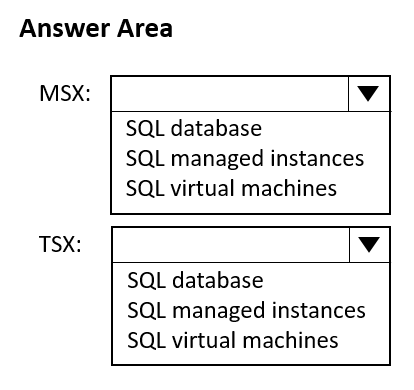
You need to ensure that the migrated environment can be managed by using multiserver administration and supports master/target (MSX/TSX) jobs.

The solution must minimize administrative effort.

Which SQL deployment options should you select as the master server (MSX) and the target server (TSX)? To answer, select the appropriate options in the answer area.

NOTE: Each correct selection is worth one point.

Question 34

You have two on-premises Microsoft SQL Server 2019 instances named SQL1 and SQL2.

You need to migrate the databases hosted on SQL1 to Azure. The solution must meet the following requirements:

• The service that hosts the migrated databases must be able to communicate with SQL2 by using linked server connections.

• Administrative effort must be minimized.

What should you use to host the databases?

  • A.a single Azure SQL database
  • B.SQL Server on Azure Virtual Machines
  • C.Azure SQL Managed Instance
  • D.an Azure SQL Database elastic pool

You have an on-premises Microsoft SQL Server 2016 instance that hosts a database named db1. You have an Azure subscription that contains an Azure SQL managed instance named MI1.

You plan to perform an online migration of db1 to MI1 by using Azure Database Migration Service.

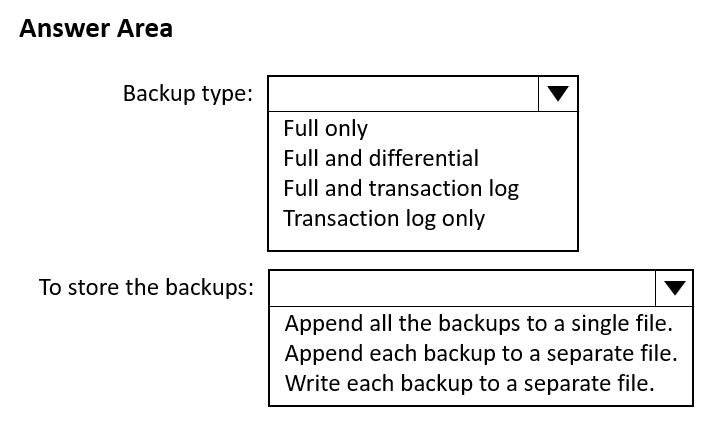
You need to create the backups for the migration. The solution must minimize the number of backup files created.

Which type of backups should you create, and how should you store the backups? To answer, select the appropriate options in the answer area.

NOTE: Each correct selection is worth one point.

Question 36

You have a SQL Server on Azure Virtual Machines instance named SQLVM1 that was deployed by using an Azure Marketplace SQL Server 2019 Enterprise image.

You need to change the Microsoft SQL Server instance on SQLVM1 to the Standard edition. The solution must ensure licensing compliance.

What should you do first?

  • A.From the SQL Server Installation Center on SQLVM1, run the Edition Upgrade wizard.
  • B.From SQLVM1, uninstall the SQL Server instance.
  • C.From the SQL Server Installation Center on SQLVM1, run the Repair wizard.
  • D.From the Azure portal, reconfigure SQLVM1.

Your on-premises network contains a Microsoft SQL Server 2016 server that hosts a database named db1.

You have an Azure subscription.

You plan to migrate db1 to an Azure SQL managed instance.

You need to create the SQL managed instance. The solution must minimize the disk latency of the instance.

Which service tier should you use?

  • A.Business Critical
  • B.Hyperscale
  • C.General Purpose
  • D.Premium

You have an Azure subscription.

You need to deploy an Azure SQL database. The solution must meet the following requirements:

• Dynamically scale CPU resources.

• Ensure that the database can be paused to reduce costs.

What should you use?

  • A.the Business Critical service tier
  • B.the serverless compute tier
  • C.an elastic pool
  • D.the General Purpose service tier

You have an Azure subscription.

You need to deploy an Azure SQL managed instance that meets the following requirements:

• Optimize latency.

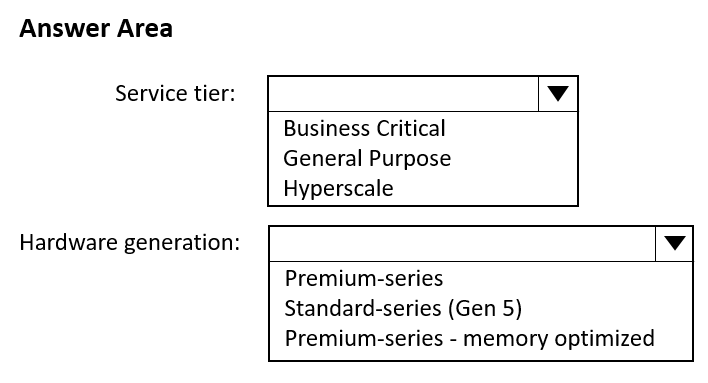
• Maximize the memory-to-vCore ratio.

Which service tier and hardware generation should you use? To answer, select the appropriate options in the answer area.

NOTE: Each correct selection is worth one point.

Question 40